

Methylene Blue Benefits and Side Effects: The Complete Guide
You’ve tried sleeping more. You’ve cleaned up your diet. You bought the magnesium, the B vitamins, the adaptogenic mushroom blend with the nice label. Maybe you even got your bloodwork done, and everything came back “normal.”
But you’re still tired. Not sick-tired. Just… dimmed. Like someone turned your brightness down to 60% and you can’t find the setting to fix it.
Here’s what nobody told you: it’s probably not your sleep. It’s not your diet. It’s your cells.
More specifically, it’s your mitochondria. Those tiny power plants inside every cell in your body are responsible for producing the energy molecule ATP, and when they slow down, everything slows down. Your brain. Your recovery. Your mood. Your ability to think a clear thought at 2 PM without reaching for caffeine.
And this is where methylene blue benefits start to make a lot more sense. Not as some trendy biohack, but as a 140-year-old compound with over 18,000 published studies that targets the exact bottleneck most people never think to address.
Let’s get into it.
What Is Methylene Blue?
Methylene blue was first synthesized in 1876 by Heinrich Caro, a German chemist working with textile dyes. It holds a distinction that most people find surprising: it’s considered the first fully synthetic drug used in medicine.
By the late 1800s, physicians discovered it could treat malaria. Paul Ehrlich, the father of chemotherapy, used methylene blue as the basis for his early work on targeted therapeutics. Before chloroquine existed, methylene blue was one of the primary antimalarial agents in the world.
Fast forward to today. Methylene blue is FDA-approved for the treatment of methemoglobinemia, a condition where the blood can’t carry oxygen properly. It’s on the World Health Organization’s List of Essential Medicines. It’s used in surgical settings as a diagnostic dye. And in research labs across the world, it’s being studied for cognitive enhancement, neuroprotection, and mitochondrial support.
This isn’t a new molecule that showed up on TikTok last year. It has 140+ years of clinical use and one of the deepest research bases of any compound in pharmacology. The reason it’s gaining attention now isn’t because it’s trendy. It’s because the science around mitochondrial dysfunction has finally caught up to what this molecule has been doing all along.
How Methylene Blue Works: The Mitochondrial Mechanism
Here’s where it gets interesting. And honestly, this is the part most people skip, but it’s the whole reason methylene blue does what it does.
Your mitochondria produce energy through something called the electron transport chain (ETC). Think of it as an assembly line with four stations (Complexes I through IV). Electrons move down the line, and at each station, energy gets captured and used to produce ATP, which is the currency your cells run on.
When this assembly line slows down, whether from aging, oxidative stress, toxin exposure, or metabolic dysfunction, your cells make less ATP. Less ATP means less energy for everything. Brain function. Muscle recovery. Immune response. All of it.
Methylene blue acts as what researchers call an “alternative electron carrier.” It can accept electrons at Complex I and donate them directly to Complex IV (cytochrome c oxidase), creating a bypass around bottlenecks in the chain. It doesn’t replace the normal process. It supports it, like adding an express lane to a highway during rush hour.
Dr. Francisco Gonzalez-Lima at the University of Texas at Austin has done some of the most important work on this mechanism. His research demonstrated a roughly 30% increase in cytochrome c oxidase activity with low-dose methylene blue administration. Cytochrome c oxidase is the final enzyme in the electron transport chain. It’s the last step before ATP gets made. A 30% boost at that step is significant.
Gonzalez-Lima’s work also showed measurable improvements in memory retention and attention in healthy human subjects, not just animal models. This is peer-reviewed, published research, not marketing copy.
The key detail: methylene blue operates on a hormetic dose-response curve. Low doses enhance mitochondrial function. High doses can actually inhibit it. This is why quality and dosing precision matter so much, but we’ll get to that.
Methylene Blue Benefits: What the Research Shows
Cognitive Performance and Memory
This is probably the most studied area for low-dose methylene blue, and the evidence is strong.
Gonzalez-Lima’s human trials showed improved memory retention and sustained attention in healthy adults at low oral doses. The mechanism tracks logically: your brain consumes roughly 20% of your body’s total energy despite being about 2% of your body weight. It’s the most energy-hungry organ you have. When mitochondrial output improves, the brain notices first.
Animal studies have demonstrated improvements in spatial memory, fear extinction (relevant to PTSD research), and learning acquisition. A 2016 study published in Neurobiology of Learning and Memory found that methylene blue enhanced memory consolidation when administered shortly after training tasks.
Multiple research groups have also investigated methylene blue’s potential in Alzheimer’s disease models, where mitochondrial dysfunction and tau protein aggregation are central features. The compound has shown the ability to inhibit tau aggregation in vitro and improve cognitive outcomes in animal models of neurodegeneration. Human clinical trials for Alzheimer’s-related applications have had mixed but encouraging results, with dose and formulation playing major roles in outcomes.
Cellular Energy and Mitochondrial Support
This is the foundational benefit, and everything else flows from it. By supporting electron transport chain function and increasing cytochrome c oxidase activity, methylene blue helps your mitochondria do their primary job: make ATP.
For people experiencing age-related energy decline, post-viral fatigue, or the kind of persistent low energy that doesn’t show up on standard lab panels, this mechanism is worth understanding. Your doctor might tell you everything looks fine. Your mitochondria might disagree.
Research published in Neurochemistry International has shown that methylene blue can increase mitochondrial complex I-III activity and improve oxygen consumption rates in brain tissue. This isn’t a stimulant effect. It’s not borrowing energy from tomorrow. It’s supporting the actual machinery of energy production.
Neuroprotection
Methylene blue has demonstrated neuroprotective properties across multiple models of neurological injury and disease.
Studies have shown protective effects against ischemic stroke damage in animal models, likely through its ability to maintain mitochondrial membrane potential during oxygen deprivation. When blood flow to the brain is interrupted, mitochondria are among the first structures to fail. A compound that keeps them running even partially during that window could limit damage.
Research has also explored methylene blue’s effects in traumatic brain injury (TBI) models, Parkinson’s disease models, and models of age-related cognitive decline. In many of these studies, the mechanism comes back to the same place: mitochondrial protection and reduced oxidative stress.
A 2017 paper in the British Journal of Pharmacology reviewed methylene blue’s neuroprotective mechanisms and concluded that its ability to function as an alternative mitochondrial electron transfer carrier, combined with its antioxidant properties, positioned it as a “promising neuroprotective agent.” That’s researcher language for “this is worth paying attention to.”
Antioxidant Activity
At low concentrations, methylene blue functions as a potent antioxidant. It cycles between its oxidized form (blue) and its reduced form (leucomethylene blue, which is colorless), and this cycling allows it to neutralize reactive oxygen species (ROS) directly within the mitochondria.
This matters because mitochondria are both the primary producers and primary targets of oxidative stress in your cells. Most oral antioxidants you’ve heard of (vitamin C, vitamin E) don’t concentrate well inside mitochondria. Methylene blue does. It goes where the damage happens.
Research published in Biochemical Pharmacology showed that methylene blue can reduce mitochondrial superoxide production and protect against oxidative damage to mitochondrial DNA. This is relevant not just for acute protection but for long-term cellular aging.
Antimicrobial Properties
Methylene blue’s original medical use was as an antimicrobial, and this property hasn’t gone away. It has demonstrated activity against bacteria, fungi, and parasites in various studies. Its antimalarial properties are well-documented and have been studied for potential use in drug-resistant malaria regions.
In photodynamic therapy (where methylene blue is activated by specific wavelengths of light), it’s been studied for wound healing, oral infections, and even certain skin conditions. When exposed to red light, methylene blue generates singlet oxygen, which is toxic to pathogens.
This dual role as both a metabolic enhancer and an antimicrobial agent makes it unusual among compounds studied for wellness applications. Most things do one or the other. Methylene blue has a credible research base for both.
Mood and Emotional Regulation
Several studies have investigated methylene blue’s effects on mood, particularly through its action as a monoamine oxidase (MAO) inhibitor at certain doses. MAO enzymes break down neurotransmitters like serotonin, dopamine, and norepinephrine. By slowing that breakdown, methylene blue may help maintain higher levels of these mood-regulating chemicals.
A study published in Psychopharmacology found that methylene blue showed antidepressant-like effects in animal models. [UNVERIFIED: Some practitioners have reported positive mood effects in clinical settings, though large-scale human trials specifically for depression remain limited.]
This MAO inhibition is also why the SSRI interaction matters, which we’ll cover in the side effects section.
Side Effects and Safety Considerations
Honesty matters here. Methylene blue is well-studied and has a long safety record at appropriate doses, but it’s not without side effects, and anyone telling you otherwise is selling you something irresponsibly.
Common, Expected Effects
Blue-green urine and stool. This happens to virtually everyone. It’s not harmful. Methylene blue is a dye, and your body excretes it. Some people also notice a slight blue tinge on the tongue and lips after oral dosing. In the MB community, it’s basically a badge of honor.
Mild GI discomfort. Some people experience nausea or stomach upset, especially at higher doses or when taken on an empty stomach. Starting with a lower dose and taking it with food often resolves this.
Dose-Dependent Effects
At higher doses (generally above 2 mg/kg), side effects become more likely and more pronounced. These can include headache, dizziness, increased blood pressure, and confusion. Remember the hormetic curve: more is not better with this compound. Low-dose is the entire point.
At very high doses (above 7 mg/kg), methylene blue can actually cause the condition it’s FDA-approved to treat, methemoglobinemia, through a paradoxical reaction. This is an argument for precision dosing, not an argument against the compound.
Serious Contraindications
SSRI/SNRI interaction. This is the big one. Methylene blue’s MAO-inhibiting activity means it should not be combined with serotonergic medications, including SSRIs (like fluoxetine, sertraline), SNRIs (like venlafaxine), and certain other antidepressants. The combination can cause serotonin syndrome, which is a potentially life-threatening condition. The FDA has issued warnings about this interaction specifically.
If you’re on any serotonergic medication, talk to your doctor before using methylene blue. This is non-negotiable.
G6PD deficiency. People with glucose-6-phosphate dehydrogenase deficiency should avoid methylene blue, as it can trigger hemolytic anemia in this population. G6PD deficiency is more common in people of African, Mediterranean, and Southeast Asian descent. If you’re unsure of your status, a simple blood test can determine it.
Pregnancy and breastfeeding. Insufficient safety data exists for methylene blue use during pregnancy or breastfeeding. Avoid it during these periods.
Renal impairment. Since methylene blue is excreted primarily through the kidneys, people with significant kidney dysfunction should exercise caution and consult a physician.
How to Choose Quality Methylene Blue
This is where the market gets messy, and honestly, it’s the reason Meraki Medicinal exists.
Methylene blue is sold in several grades, and the differences matter enormously:
USP pharmaceutical-grade is manufactured to United States Pharmacopeia standards, meaning it meets strict purity requirements for human use. This is the grade used in FDA-approved medical settings.
Chemical/reagent-grade is manufactured for laboratory use. It’s pure enough for experiments but not tested or certified for human consumption.
Industrial/technical-grade is the stuff used in aquariums, textile dyeing, and other non-biological applications. It can contain heavy metals, organic impurities, and residual solvents. And yes, some brands on the market are selling repackaged industrial-grade methylene blue as supplements.
What to Look For
Certificate of Analysis (COA). Any reputable supplier will provide third-party COA documentation. If they don’t have one or won’t share it, walk away. The COA should show purity levels (look for 98%+ for USP-grade) and test for heavy metals, residual solvents, and microbial contamination.
Heavy metal testing. This is particularly important for methylene blue because of its industrial origins. The synthesis process can introduce contaminants like lead, arsenic, mercury, and cadmium if proper pharmaceutical manufacturing controls aren’t in place. At Meraki, we test for 14 heavy metals on every batch. That’s not an accident. That’s because we’ve seen what some competitors’ COAs look like.
USP designation. If the label doesn’t specify USP pharmaceutical-grade, assume it isn’t. Some brands use vague language like “lab-tested” or “high-purity” without meeting USP standards. Those aren’t the same thing.
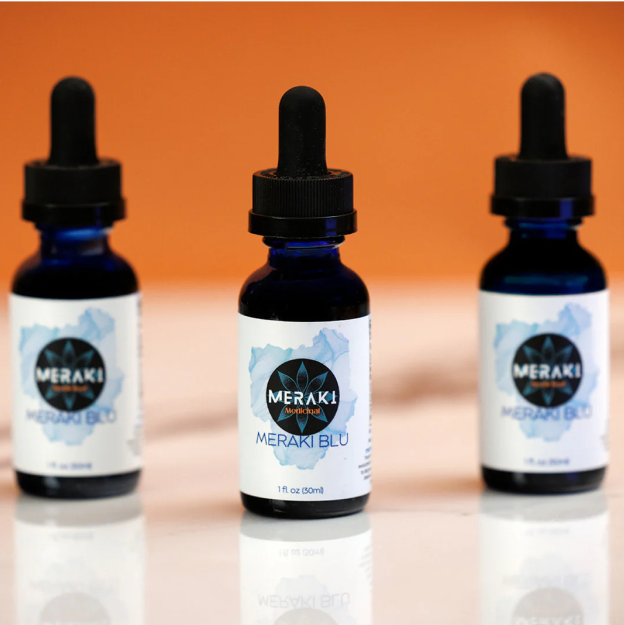
Dose accuracy. With a hormetic compound where the difference between beneficial and counterproductive doses is meaningful, you need precise dosing. Dropper bottles with clearly marked concentrations (typically 1% solution, or about 0.5 mg per drop) allow for controlled dosing.
Frequently Asked Questions
What are the primary methylene blue benefits?
The most well-supported benefits include enhanced mitochondrial energy production through electron transport chain support, improved cognitive performance and memory (backed by Gonzalez-Lima’s research showing ~30% increases in cytochrome c oxidase activity), neuroprotective effects against oxidative stress, direct antioxidant activity within mitochondria, and antimicrobial properties. Over 18,000 studies have been published on methylene blue across these applications.
Is methylene blue safe to take daily?
At low doses (typically 0.5-2 mg/kg), methylene blue has a well-established safety profile backed by over 140 years of medical use. The most common side effect is blue-green discoloration of urine, which is harmless. However, it should not be taken with SSRIs, SNRIs, or other serotonergic medications due to the risk of serotonin syndrome, and people with G6PD deficiency should avoid it entirely.
Why does methylene blue turn urine blue?
Methylene blue is a dye compound. Your kidneys filter it from your blood and excrete it in urine, which takes on a blue or blue-green color. This is completely normal and not a sign of any adverse reaction. It typically resolves within 24-48 hours after your last dose.
What’s the difference between pharmaceutical-grade and industrial-grade methylene blue?
USP pharmaceutical-grade methylene blue is manufactured under strict quality controls for human use, with verified purity (98%+), heavy metal testing, and documented Certificates of Analysis. Industrial-grade methylene blue is made for non-biological applications like aquarium treatment and textile dyeing. It can contain heavy metals and impurities unsafe for human consumption. Always verify that any methylene blue supplement specifies USP pharmaceutical-grade and provides third-party COA documentation.
Can methylene blue help with brain fog?
Research supports that methylene blue enhances mitochondrial function in brain tissue, and the brain is the most metabolically demanding organ in the body. By improving electron transport chain efficiency and increasing ATP production in neurons, methylene blue addresses one of the underlying cellular mechanisms that can contribute to brain fog. Gonzalez-Lima’s research demonstrated measurable improvements in memory and sustained attention in healthy human subjects.
How long does it take to notice effects from methylene blue?
Many users report noticing improved mental clarity and energy within the first few days of use. The acute cognitive effects observed in research studies were measured within hours of administration. Longer-term mitochondrial benefits likely accumulate over weeks of consistent use, as cellular energy production capacity improves progressively.
Who should NOT take methylene blue?
People currently taking SSRIs, SNRIs, MAOIs, or other serotonergic medications should not take methylene blue without medical supervision due to the risk of serotonin syndrome. People with G6PD deficiency should avoid it due to the risk of hemolytic anemia. Pregnant or breastfeeding women should avoid it due to insufficient safety data. Anyone with significant kidney impairment should consult a physician first.
Your Mitochondria Aren’t Going to Fix Themselves
Here’s the thing about cellular energy decline: it doesn’t announce itself with a dramatic crash. It’s a slow fade. You’re 5% less sharp this year than last year. Recovery takes a little longer. The afternoon wall hits a little earlier. And because it happens gradually, you just… adjust. You drink more coffee. You assume it’s stress. You normalize it.
But your mitochondria don’t care about your coping strategies. They’re either producing energy efficiently or they’re not. And if they’re not, no amount of sleep hygiene or meal prepping will solve the underlying problem.
Methylene blue isn’t magic. It’s a 140-year-old molecule with over 18,000 published studies that works at the most fundamental level of cellular energy production. The research is there. The mechanism is well-understood. The question is whether you’re going to keep optimizing around the bottleneck or actually address it.
If you want to see the science for yourself, our full third-party lab results and COAs are available on our website. Every batch. Every test. No exceptions.
We created Meraki because we needed something that didn’t exist yet: USP pharmaceutical-grade methylene blue, tested for 14 heavy metals, with precise dosing, made by people who actually use the product. Over 114,000 customers and 7,000+ reviews at a 4.47 out of 5 average tell us we weren’t the only ones looking.
[Learn more about our USP pharmaceutical-grade methylene blue →]