
Methylene Blue Dosage Guide: How Many Drops to Take (and Why More Isn’t Better)
You bought the bottle. Now you’re staring at it.
Blue liquid. A dropper. Zero instructions that make sense for someone who isn’t a hospital pharmacist. Every “dosage guide” you find online starts talking about IV injections and methemoglobinemia treatment, which is about as useful as a car manual when you need to know which way to turn the steering wheel.
Here’s your actual answer on methylene blue dosage: start with 1 to 3 drops per day. Most people settle around 20 drops, which is roughly 5 mg. But the range matters, and so does the math behind it, because methylene blue is one of the rare compounds where taking more can actually give you less.
We’ve shipped Meraki Blu to over 114,000 customers. Dosing is the number one question we get. Not “does it work.” Not “is it safe.” Just: how much?
So let’s get into it.
Why Methylene Blue Dosage Matters More Than You Think
Most supplements are forgiving. Take a little extra vitamin C and your body flushes the surplus. Double your magnesium and you might get loose stools. No big deal.
Methylene blue doesn’t work that way.
It follows what researchers call a hormetic dose-response curve. Fancy term. Simple concept. At low doses, MB works as an alternative electron carrier in your mitochondria. It shuttles electrons through the electron transport chain, specifically supporting Complex IV (cytochrome c oxidase). The result: more efficient energy production at the cellular level. In fact, this is the core of how methylene blue supports mitochondrial health.
At high doses, the mechanism flips. Instead of donating electrons, MB starts pulling them away from the chain. It becomes a pro-oxidant. Your mitochondria work harder but produce less usable ATP.
Think of it like this. A cup of coffee sharpens your focus. Twelve cups of coffee gives you heart palpitations and a headache. Same compound, opposite outcomes, separated by dose.
Dr. Francisco Gonzalez-Lima at the University of Texas has published extensively on this. His research shows that low-dose methylene blue enhances memory, increases brain metabolic activity, and improves mitochondrial function. Go above that effective window and benefits plateau or reverse.
This is why the first question isn’t “how much should I take.” It’s “what concentration am I working with.”
Know Your Concentration Before Counting Drops
Not all methylene blue products are the same strength. And this is where most people mess up their dosing.
A 1% solution contains 10 mg per mL. Each drop delivers roughly 0.5 mg. A 0.5% solution contains 5 mg per mL. Each drop delivers roughly 0.25 mg.
That difference means a “10 drop dose” from a 1% solution (5 mg) requires 20 drops from a 0.5% solution to match. If you’re following someone else’s protocol without checking their concentration against yours, you’re either taking double what you intend or half.
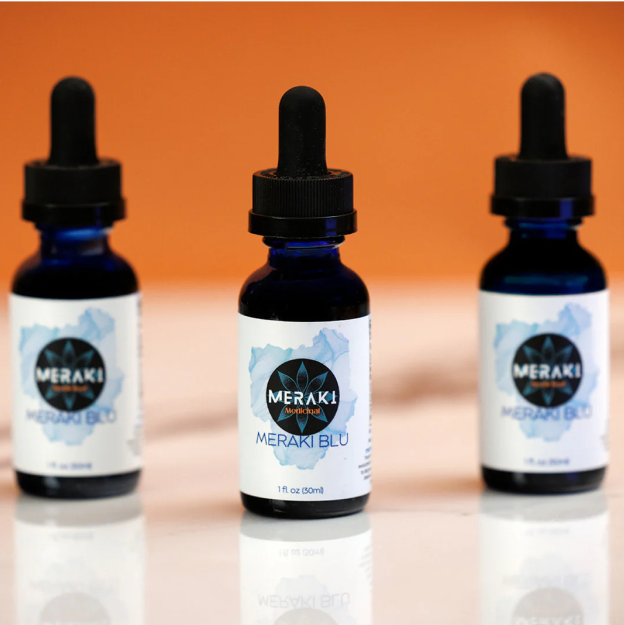
Meraki Blu specifics: - 0.5% pharmaceutical-grade solution - 5 mg per mL (COA verified at 5.27 mg/mL, example: Lot #081225) - Approximately 0.25 mg per drop - 150 mg total per 30 mL bottle - About 600 drops per bottle
The 0.5% concentration was a deliberate choice. A lower amount per drop means you can dial in your dose with precision. One drop at a time. No overshooting. This matters because of that hormetic curve we just talked about. When the sweet spot is narrow, precision is the whole game.
Methylene Blue Dosage Chart
Based on Meraki Blu’s 0.5% concentration (0.25 mg per drop):
| Goal | Daily Drops | Daily Dose | Notes |
|---|---|---|---|
| Beginner (testing tolerance) | 1-3 drops | 0.25-0.75 mg | Start here regardless of body weight |
| Low dose (maintenance) | 4-12 drops | 1-3 mg | Where most beginners settle after week 1 |
| Standard dose (most common) | ~20 drops | ~5 mg | 90% of our customers report this as their daily dose |
| Higher dose (experienced users) | 20-40 drops | 5-10 mg | Consider professional guidance |
| Upper range | 40-60 drops | 10-15 mg | Only under professional guidance |
A few things to notice about this chart.
The beginner dose is the same for everyone. Whether you weigh 120 pounds or 220 pounds, start with 1 to 3 drops. This isn’t about body weight. It’s about seeing how your body responds to a compound it’s never encountered before. Some people feel a noticeable shift in clarity from a single drop. Others need a full week at 3 drops before they notice anything.
The “standard dose” of roughly 5 mg (about 20 drops) is based on what our customers actually report. Not what a clinical trial protocol calls for. Clinical research typically uses 0.5 to 2 mg per kilogram of body weight, which translates to 35-140 mg for a 154-pound person. Those are not supplement doses. Do not use clinical research dosing as a guide for daily supplementation.
The upper range exists for people working with healthcare professionals who have a specific reason to go higher. We don’t recommend anyone reach 15 mg on their own.
Your First Week: A Step-by-Step Protocol
Day 1 through 3: Take 1 drop in the morning, mixed into 4 to 8 ounces of water. Yes, one single drop. The point isn’t to feel something dramatic. The point is to confirm you don’t have an adverse reaction. Watch for unusual nausea, headache, or GI discomfort beyond what’s normal. Blue-green urine is expected and harmless.
Day 4 through 7: If day 1 through 3 went fine, increase to 3 drops in the morning. Same routine. Water, morning, consistency. Some people start noticing a subtle clarity shift here. Most don’t yet. That’s normal.
Week 2: Move to 5-8 drops (roughly 1.25-2 mg). Still morning dosing. You might notice slightly more sustained energy in the afternoon, fewer moments of “why did I walk into this room.” Personally, I noticed the clarity shift around day 10. Not day 1. That’s normal, and it’s worth the patience.
Week 3 and beyond: Increase by 3-5 drops every few days until you reach your sweet spot. For most people, that’s somewhere around 15-20 drops (roughly 4-5 mg). Some settle lower. Some go slightly higher. Pay attention to how you feel, not to what a Reddit thread says you should be taking.
The slow approach isn’t about being cautious for caution’s sake. It’s about finding the lowest effective dose. More isn’t better with MB. It’s just more.
What to Expect: A Realistic Timeline
Let’s kill the unrealistic expectations upfront.
Day 1: Your tongue turns blue. Your urine turns blue-green. These are the only guaranteed first-day effects. They’re cosmetic, harmless, and actually a useful sign the MB is absorbing. If neither happens, check your product quality.
Week 1 (1-3 drops): Most people feel nothing different. That’s fine. You’re establishing tolerance, not seeking effects.
Week 2-3 (5-15 drops): This is where subtle shifts often begin. People describe it differently. “I didn’t crash at 2pm.” “I realized I’d been focused for three hours without checking my phone.” “The fog lifted, but it wasn’t a dramatic moment. I just noticed it was gone.” Not everyone feels this. Not everyone feels it at the same timeline.
Month 1-3 (at your stable dose): The effects people report at this stage tend to be less about acute cognitive shifts and more about sustained patterns. Better baseline energy. More consistent focus. Fewer “lost” afternoons.
What it’s NOT: Methylene blue is not Adderall. It doesn’t produce a sharp, immediate cognitive boost you can time to a meeting. It’s a mitochondrial support compound. The changes are often noticed in retrospect, not in the moment. If someone tells you they felt like a genius 30 minutes after their first drop, that’s placebo. If you’re dealing with brain fog specifically, we wrote a deep-dive on that.
When to Adjust Your Dose
Signs you might increase: You’ve been at your current dose for 2 or more weeks with no noticeable benefit. You started at 1-3 drops and haven’t moved past 5 drops yet. You’re well below the 5 mg common range and tolerating it without any side effects.
Signs you might decrease: GI discomfort that doesn’t resolve after a few days. Headaches that correlate with dosing timing. Feeling “wired” or restless. Any of these suggest you’ve moved past your personal sweet spot.
Signs to stop and consult a doctor: Severe nausea or vomiting. Chest tightness or difficulty breathing. Significant changes in heart rate. Allergic reaction symptoms. These are rare at supplement doses, but they’re not zero.
The cycling question: Some users cycle methylene blue (5 days on, 2 days off, or 3 weeks on, 1 week off). The reasoning involves MB’s 5 to 6 hour half-life and potential accumulation with consistent daily use. There’s no definitive research on optimal cycling protocols for supplement doses. Our take: if you feel consistently good at your dose, daily use is fine. If benefits seem to diminish over time, try a 2-day break and see if they return.
Safety: The Interactions That Actually Matter
This section isn’t optional reading.
SSRI, SNRI, and MAOI Medications: This is the most critical interaction. Methylene blue inhibits monoamine oxidase at higher doses, which can increase serotonin levels. Combined with serotonergic medications (Prozac, Zoloft, Lexapro, Effexor, Cymbalta, and others), this creates a risk for serotonin syndrome. The FDA warning was issued based on IV doses of 1-8 mg/kg (70-560 mg for a 154 lb person), far above supplement ranges. But the interaction is dose-dependent, not binary. If you take any serotonergic medication, talk to your prescribing physician before touching methylene blue. Full stop. For a complete breakdown of what to watch for, see our methylene blue side effects guide.
G6PD Deficiency: People with glucose-6-phosphate dehydrogenase deficiency should not take methylene blue. It can trigger hemolytic anemia. G6PD deficiency affects approximately 400 million people worldwide and is more common in people of African, Mediterranean, and Southeast Asian descent. If you don’t know your G6PD status and have risk factors, get tested first.
Pregnancy and Breastfeeding: No adequate safety data exists for MB during pregnancy or breastfeeding. Consult your physician.
Blue urine and tongue: Normal. Expected. Harmless. The blue color comes from unmetabolized MB being excreted through your kidneys. Your tongue stains because MB is a dye. It washes off within hours. Some people consider the blue tongue a badge of honor. Others find it alarming the first time. Now you know it’s coming.
Frequently Asked Questions
How many drops of methylene blue should I take?
For Meraki Blu (0.5% solution, 0.25 mg per drop): start with 1-3 drops daily. Most people settle at about 20 drops (~5 mg) after a few weeks of gradual increase. If you’re using a different concentration, do the math. A 1% solution delivers 0.5 mg per drop, so the drop counts will be different.
Can you take too much methylene blue?
Yes. MB follows a hormetic curve where low doses enhance mitochondrial function and high doses impair it. At supplement ranges (1-15 mg daily), serious side effects are uncommon. The clinical toxicity threshold starts around 2 mg/kg body weight. For a 154-pound person, that’s about 140 mg. That’s roughly 560 drops of Meraki Blu. Nobody is accidentally taking that much.
Does methylene blue interact with medications?
The critical interaction is with serotonergic drugs (SSRIs, SNRIs, MAOIs). This combination increases serotonin syndrome risk. Also notable: methylene blue can affect blood pressure medications and blood thinners. Always disclose MB use to your doctor, especially before any surgical procedure (MB is used in some surgeries and anesthesiologists need to know).
How long does methylene blue stay in your system?
The half-life is approximately 5-6 hours. Most of an oral dose clears within 24-30 hours. Your urine will be blue-green for roughly 24 hours after each dose. This is completely normal.
Is methylene blue safe to take every day?
At low supplement doses (1-15 mg), daily use is common among researchers and supplement users. MB has over 140 years of medical history and more than 18,000 published studies. Some users prefer cycling (5 days on, 2 days off) to prevent potential accumulation, though no definitive protocol research exists at supplement doses.
Should I take methylene blue in the morning or at night?
Morning is preferred. MB supports mitochondrial energy production and can promote alertness. Taking it in the evening may interfere with sleep for some users. If you’re splitting your dose, take the second portion no later than early afternoon.
Should I take methylene blue with food or on an empty stomach?
Most people tolerate MB best with a small amount of food or diluted in water. Pure drops on a completely empty stomach can cause mild nausea. Water dilution also reduces temporary staining in your mouth.
Why is my methylene blue a different shade of blue?
Concentration affects color intensity. A 0.5% solution appears lighter than a 1% solution. If your MB is clear or extremely pale, that could indicate degradation or contamination. Pharmaceutical-grade MB should be a consistent, vivid blue. If it looks off, contact the manufacturer.
The Bottom Line on Methylene Blue Dosage
Start low. Go slow. Find your dose, not someone else’s.
One to three drops for your first few days. Increase gradually. Most people land around 20 drops (5 mg). Let your body tell you where the sweet spot is. More isn’t better with this compound. Precision is the whole point.
And if you’re going to put something in your body that crosses your blood-brain barrier every single day, make sure you know exactly what’s in each drop. Meraki Blu is 0.5% USP pharmaceutical-grade methylene blue, Clean Label Project certified, made in Las Vegas, Nevada. Every batch comes with a Certificate of Analysis. Every drop is 0.25 mg. No guessing.
See our full product details, COA, and dosing information →