




9 Things Your Doctor Probably Hasn't Told You About Cognitive Aging (And the 140-Year-Old Fix Researchers Just Rediscovered)
New research from the University of Texas is changing how we understand what actually happens inside an older brain.

The clarity so many of us thought we'd lost forever may have been hiding somewhere no one was looking.
- Cognitive decline after 55 is measurable, widespread, and often misdiagnosed as just aging
- Fish oil, ginkgo, and most memory supplements work on the wrong pathway
- A 140-year-old pharmaceutical compound works on the actual root cause, backed by University of Texas research
Maybe it happened in the kitchen. You walked in and couldn't remember why.
Or watching the news, when you realized you'd lost the thread and had to rewind again.
Or mid-sentence, talking to your grandkid, when a word you've known your whole life just went missing.
You laughed it off and blamed the sleep. But later that night, lying in bed, you wondered: is this the start of something?
Here's what nobody explains clearly. This isn't dementia or Alzheimer's, and it isn't “just getting older.” It's a mitochondrial energy crisis inside your brain cells, and there's real, peer-reviewed science on how to support it.
Yes, It's Real. No, You're Not Losing It. And You're Not Alone.
Tell me if this is you. You went to your doctor. You described the fog, the word thing, the feeling that your mind isn't as sharp as it used to be. You walked out with “that's normal aging” or “try to sleep more.”
You're not losing it, you're not alone, and frankly, you're being let down by standard advice.
The research is clear on this now. Measurable cognitive changes after 55 are widespread and almost always underdiagnosed. These aren't dementia, but they're also not imagined.
If any of this sounds like you, welcome to the club:
- You lose words mid-sentence, even words you've known forever
- Reading the newspaper feels harder than it used to
- You walk into a room and forget why you came in
- You've tried fish oil, ginkgo, Prevagen, and nothing touched it
- Your doctor said “sleep more” or “it's normal for your age”
“Normal for your age” is the hand-wave that hides the actual problem. Let's talk about what's really going on.
Here's What Nobody Bothered to Explain
For decades, the story we were told was simple. As you age, brain cells die. There's nothing you can do about it.
That turns out to not be what's actually happening.
Researchers at the University of Texas, the University of Alberta, and other institutions have been building a very different picture over the last 20 years. The answer has less to do with dying cells than with dying batteries.
Every brain cell contains thousands of mitochondria, tiny power plants that generate the energy your neurons need to fire and form memories. As we age, these mitochondria become less efficient. Neurons get less fuel. Cognitive function suffers.
Think of your brain as a city with the buildings still standing and the roads still there, but the power grid failing. Lights flicker. Whole neighborhoods go dim. Nothing is destroyed. The city just can't keep the lights on.
This isn't dementia. It's an energy crisis. And unlike cell death, an energy crisis can potentially be supported.
The University of Texas Research That Changed the Field
Dr. Francisco Gonzalez-Lima at the University of Texas at Austin has spent years looking into exactly this mechanism. And what his lab found changed how researchers think about cognitive aging.
In controlled studies, healthy adults given a single low dose of methylene blue showed measurable improvements in both immediate and delayed verbal memory. Effects showed up within hours and lasted for days.
Brain imaging showed increased metabolic activity in the regions responsible for forming and retrieving memories. The mitochondria were producing more energy. The cognitive performance followed.
This wasn't a supplement company making promises on a label. This was peer-reviewed research at a major university showing that a 140-year-old compound could measurably improve how well the brain forms and retrieves memories.
Why Fish Oil, Ginkgo, and Prevagen Don't Touch This
If you've tried the standard memory stack already, you're not alone. Most of us have.
Here's why it usually doesn't work.
Fish oil works on inflammation. Ginkgo works on blood flow. Prevagen is based on a protein found in jellyfish, with research that the FTC has repeatedly challenged. None of these work on mitochondrial function. None of them address the actual energy problem.
That's the gap. The supplements you've already tried are working on different pathways. Methylene blue works on the one pathway the research actually points to.
Methylene blue can interact with antidepressants (SSRIs, SNRIs, MAOIs) and some migraine medications. If you take any of those, talk to your doctor before starting Meraki Blu. This is not a minor caution — the interaction can be serious.
Here's how Meraki Blu stacks up against what's on the supplement shelf.
| Benefit | Meraki Blu | Most Other Supplements |
|---|---|---|
| Addresses the mitochondrial root cause | ✓ | × |
| Peer-reviewed memory improvement | ✓ | rare |
| Pharmaceutical-grade purity (USP 99%+) | ✓ | × |
| Third-party lab tested every batch | ✓ | rare |
| Works within hours, not weeks | ✓ | × |
| 140-year medical safety record | ✓ | × |
| 220,000+ verified customers | ✓ | varies |
The 140-Year-Old Compound Working on Exactly This Problem
It's called methylene blue. A German chemist synthesized it in 1876, and hospitals have used it ever since. Today it sits on the shelf in emergency rooms across the country, next to the epinephrine and the antibiotics. This is not a supplement company's new invention. It's a pharmaceutical compound with 140 years of medical history and more than 18,000 peer-reviewed studies behind it.
You might be wondering why you've never heard of this. For most of those 140 years, methylene blue was a medical tool, not a cognitive one. The UT Austin research linking it to cognitive support is only about a decade old. The shift from “pharmaceutical emergency tool” to “cognitive support” is genuinely recent.
At very low doses, methylene blue acts as a backup electron carrier in your mitochondria. In plain terms: when your brain cells' power plants start struggling, methylene blue steps in and helps keep the energy flowing. A backup generator for your neurons, working on the exact mechanism the University of Texas research pointed to.
Here's what taking it looks like. One drop under your tongue or in a glass of water, each morning. No prescription needed. No complicated timing. Effects show up in hours for most people and build over weeks.
One heads up: your urine will turn blue-green while you're taking it. Totally harmless, documented in medical literature for over 100 years, and actually a useful confirmation that the compound is in your system doing its job.
18,000+ published scientific studies have examined methylene blue since its discovery. Few compounds in existence have been studied more.
Please Do Not Buy the Cheap Stuff. I'm Begging You.
If you take one thing away from this article, let it be this.
The methylene blue used in the University of Texas research was pharmaceutical grade. USP-certified. 99%+ pure. Third-party tested. Made for humans.
The methylene blue sold most places online is a different story. Most of what you'll find on Amazon is industrial grade. The stuff literally used to clean aquariums. Often imported without heavy-metal testing. Frequently 5-20% off its labeled concentration. Made for fish tanks.
For something going directly to your brain cells, this is not a detail. It's the detail. Here's what to look for:
- USP-Grade Purity at 99%+, same grade used in clinical research
- Pharmaceutical quality, manufactured in an FDA-registered facility
- Third-party tested for heavy metals every batch
- Made in USA with traceable sourcing
- 220,000+ customers, the largest methylene blue community in North America
Three People Who've Been Where You Are
Names and some details changed. Stories composite but representative of verified customer feedback.
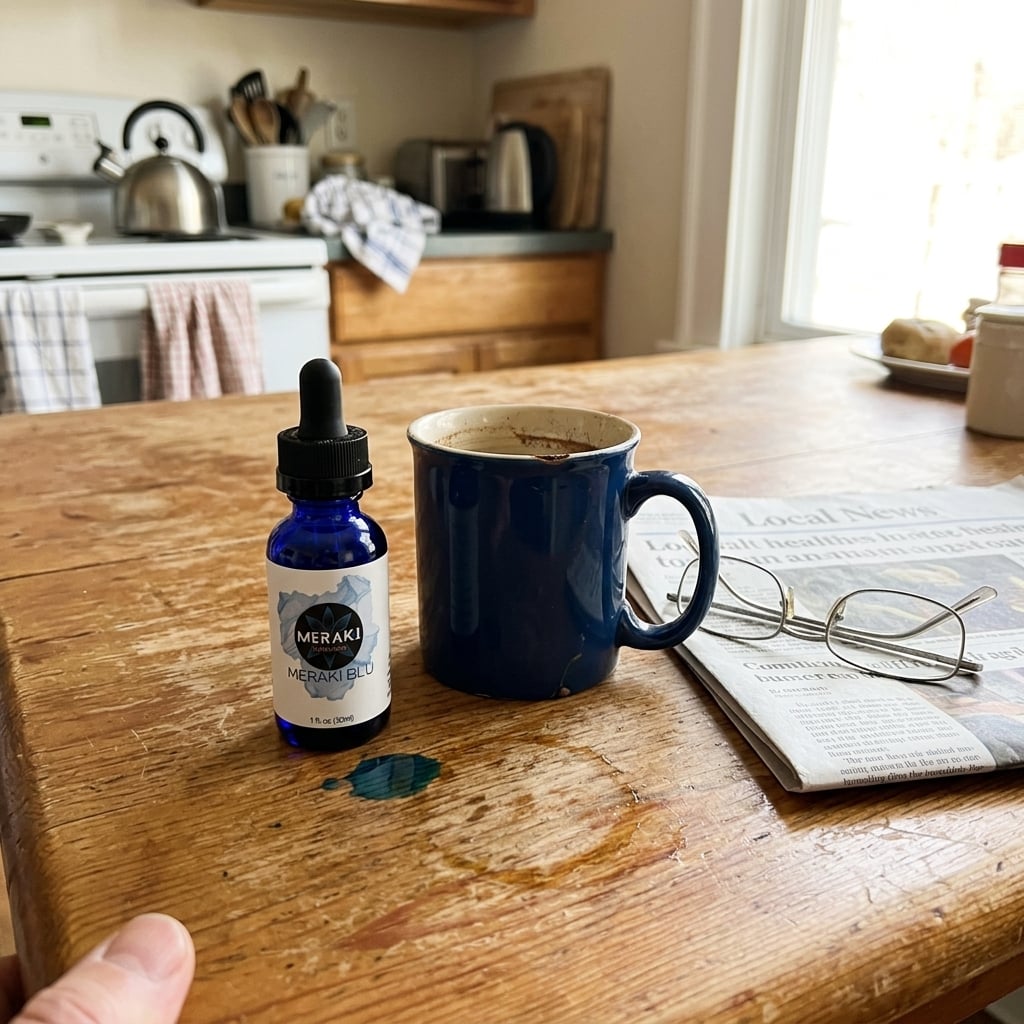
I almost didn't order. I'd tried fish oil, Prevagen, three different memory supplements over about four years. Nothing was doing much. My wife actually ordered it. Said I was being stubborn. The first couple weeks I figured it was another dud. Then around week three I was playing bridge and realized I'd tracked the hand all the way through without once losing count. Small thing. But I hadn't done that in two years. Now I'm on my fifth bottle.
— Robert, 68, retired, bridge player
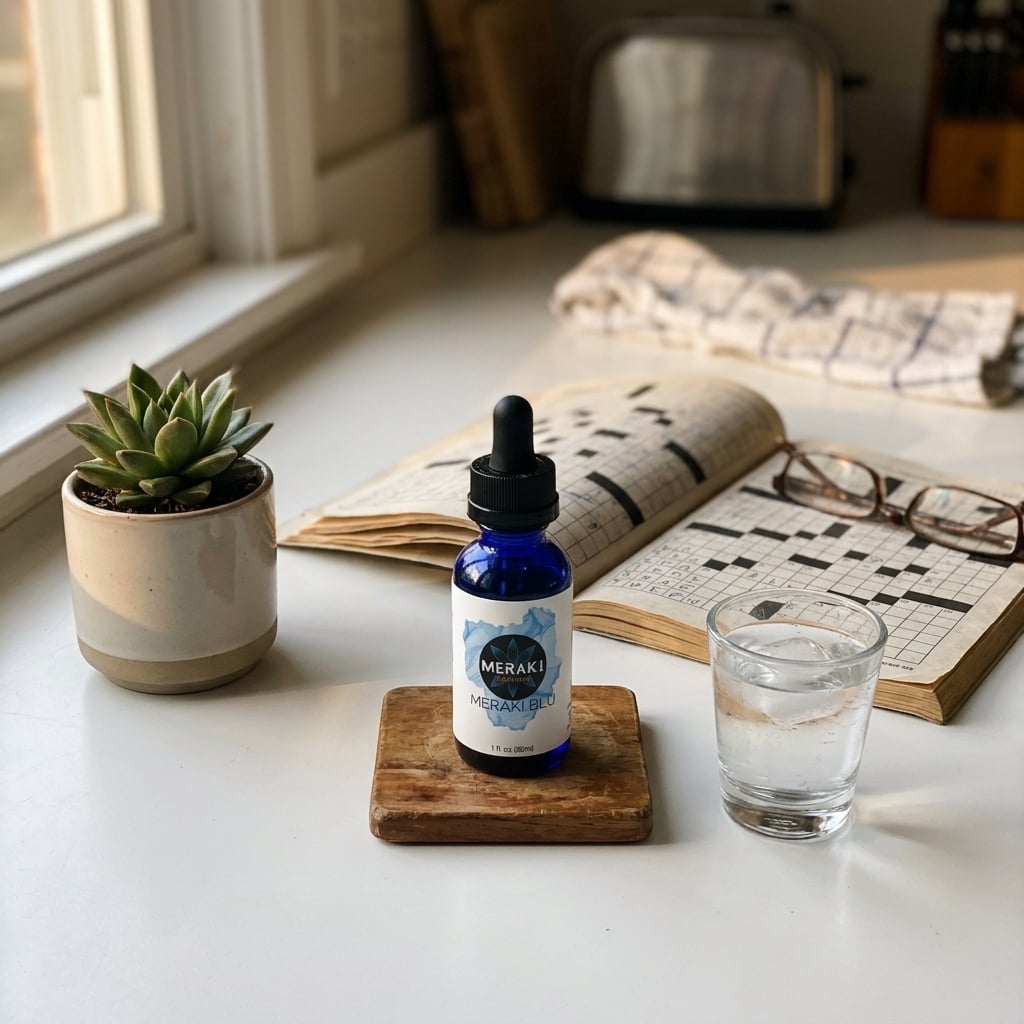
The brain fog after lunch used to wipe out my whole afternoon. I'd just sit in my chair and stare at the TV. My daughter is a nurse and she read the research before she let me try this. She wanted to make sure it wasn't going to interact with my blood pressure medicine. Around day twenty-something I noticed I was reading my book club book and actually retaining what I was reading. I'm not hunting for words anymore. My daughter told me last Sunday I sound like myself again.
— Patricia, 72, grandmother of four
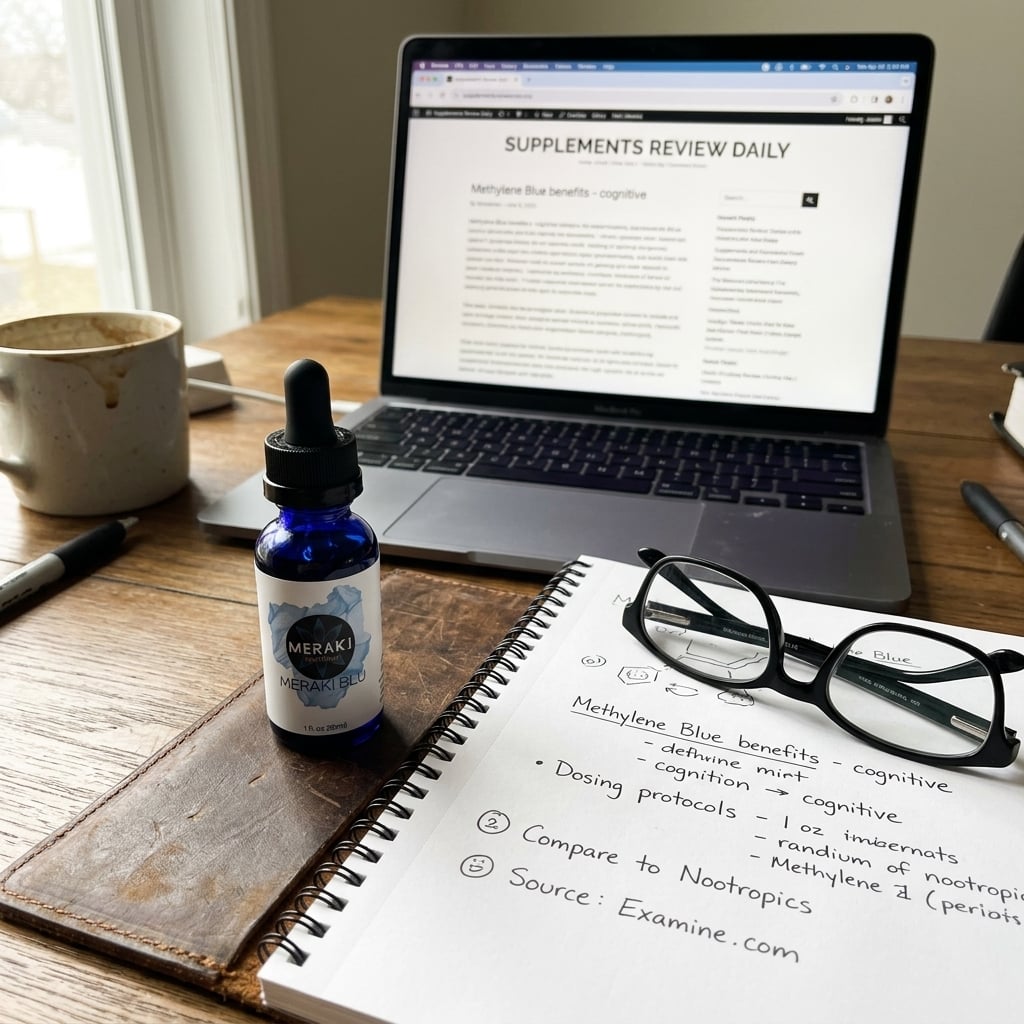
I spent 35 years as a mechanical engineer, so I read research before I buy anything. The Gonzalez-Lima papers out of UT Austin are what convinced me it had a real mechanism. I'm about seven weeks in now. The main thing I notice is that I'm not hunting for words during conversations. My wife noticed too. She said I seemed more present. I went ahead and ordered the three-month supply.
— David, 71, retired engineer
What to Expect the First 90 Days
Here's what to actually expect, week by week, so you can set realistic expectations (this isn't a miracle pill, it's a mitochondrial support).
Week 1-2: Most of us notice subtle stuff first. A bit more clarity in the morning. Steadier focus during conversations. Some people don't notice anything yet. Both are normal. Mitochondrial support builds.
Week 3-4: This is where most people feel the real difference. The “tip of the tongue” moments happen less. Reading a page feels like reading a page again. The afternoon fog isn't crushing you.
Month 2-3: This is the compounding effect. The part where family members start noticing. One customer put it this way: “My daughter said I sounded like myself again.”
How to Start Today
A lot of customers in this age range like to start before their next doctor visit so they have something to bring up and discuss. Others just want to try it and see how the first four weeks go.
Here are the three ways to start:
Meraki Blu
Pharmaceutical-grade methylene blue · 150mg USP · Third-party tested

Try it risk-free. If it doesn't work in a month, we'll refund you. No questions asked.
We're confident enough in Meraki Blu to offer a full 30-day money-back guarantee. If you don't notice a meaningful difference in your clarity and focus within a month, contact us for a complete refund. No hassle. No questions that make you feel guilty for asking. *See return policy
Common Questions
Is this safe with my medications?
Methylene blue has been used safely in hospitals for 140 years. That said, it can interact with certain medications, particularly SSRIs, SNRIs, and MAO inhibitors. If you take antidepressants or anxiety medication, talk to your doctor before starting. Meraki's customer care team can also help answer questions.
My doctor hasn't heard of this. Should I be concerned?
Not at all. Most doctors know methylene blue as a hospital medication used in emergencies. The idea of taking it daily at micro-doses for cognitive support is a newer application of very old science. Feel free to share the Gonzalez-Lima research with your doctor.
How is this different from fish oil or ginkgo biloba?
Fish oil works through anti-inflammatory pathways. Ginkgo works through blood flow. Methylene blue directly supports mitochondrial ATP production in brain cells. You don't need to stop your other supplements. This addresses a different root cause.
I'm 78. Is it too late?
University research has shown memory improvements in adults across age ranges. Many of Meraki's most enthusiastic customers are in their 60s, 70s, and 80s. There's no age cutoff on mitochondrial energy. Your brain cells need power whether you're 55 or 85.
Do I really need pharmaceutical grade, or is industrial grade fine?
If you're using methylene blue for your brain, pharmaceutical grade is not optional. Industrial-grade methylene blue (the kind sold to clean aquariums) can contain heavy metals, bacteria, and contaminants. Meraki Blu is USP-certified 99%+ pure, manufactured in an FDA-registered facility, and third-party tested every batch.
How long until I notice a difference?
Most customers notice subtle changes within the first 1-2 weeks. A bit more clarity in the morning, slightly better focus. By week 3-4 the difference usually becomes clear. By month 2-3, family and friends often start commenting.
Methylene blue may interact with serotonergic medications (SSRIs, SNRIs, MAOIs). If you take any antidepressant, anti-anxiety medication, or migraine medication, do not start Meraki Blu without talking to your doctor. Not recommended during pregnancy or breastfeeding. Individuals with G6PD deficiency should not use methylene blue. Blue-green discoloration of urine is normal and harmless. This product is not intended to diagnose, treat, cure, or prevent any disease.
Disclaimer: This article is for informational purposes only and does not constitute medical advice. The statements made about methylene blue have not been evaluated by the Food and Drug Administration. This product is not intended to diagnose, treat, cure, or prevent any disease. Individual results may vary. Always consult with a qualified healthcare professional before starting any new supplement, especially if you take prescription medications (particularly SSRIs, SNRIs, or MAOIs), have G6PD deficiency, or have existing medical conditions. Testimonial names and some details have been changed. Stories are composite but representative of verified customer feedback. The editorial content above represents independent health reporting and includes sponsored product information per FTC guidelines.