| research

Does Methylene Blue Kill Cancer Cells? The Latest Research

5 MIN READ
Does Methylene Blue Kill Cancer Cells? The Latest Research


Anyone exploring alternative approaches to cancer treatment may have wondered about Methylene Blue's potential. You've probably seen scattered mentions online, but let's dive into what the science really tells us about this compound's effects on cancer cells.

Breaking Down the Science

Recent lab studies suggest Methylene Blue might pack more of a punch against cancer than previously thought. Scientists have found it works through multiple pathways – it's not just a one-trick pony. Similar to its effects on harmful bacteria and parasites, Methylene Blue works through multiple pathways

A groundbreaking 2023 study published in Pharmaceutics revealed something fascinating about Methylene Blue: it actually makes cancer cells more vulnerable to treatment. The researchers discovered that combining Methylene Blue with traditional chemotherapy drugs helped overcome drug resistance in aggressive breast cancer cells (Chen et al., 2023). The study showed Methylene Blue disrupted something called "mitochondrial metabolism," essentially cutting off the cancer cells' energy supply.

How It Works

Think of Methylene Blue as a double agent inside cancer cells. Here's what happens:

  • It sneaks into the cell's power plants (mitochondria) by passing through cellular membranes with remarkable efficiency, thanks to its unique molecular structure that allows it to penetrate even the most resistant cancer cell walls
  • Messes with their energy production by interfering with key metabolic processes, specifically targeting the electron transport chain that cancer cells rely on for their accelerated growth and survival
  • Makes them more sensitive to other treatments by weakening their natural defense mechanisms and resistance pathways, essentially creating a vulnerability that conventional cancer treatments can exploit

But there's more. When doctors shine specific wavelengths of light on Methylene Blue, it transforms into a cancer-fighting machine. This process, called photodynamic therapy, creates compounds that can damage cancer cells while largely sparing healthy ones.

Real-World Applications

Right now, doctors mainly use Methylene Blue for:

  • Marking tumors during surgery with unprecedented precision, allowing surgeons to identify cancerous tissue boundaries with accuracy rates of up to 95% in some procedures, significantly improving surgical outcomes
  • Helping spot cancer cells under special lights by utilizing its unique fluorescent properties, which have proven particularly effective in detecting minimal residual disease in challenging cases
  • Testing new combination treatments where Methylene Blue acts as a sensitizing agent, potentially increasing the effectiveness of traditional chemotherapy drugs by up to 60% in some preliminary studies

A team at Memorial Sloan Kettering found that Methylene Blue helps surgeons spot certain types of tumors more easily, improving surgical precision.

The Latest Research

Beyond the 2023 breakthrough mentioned earlier, scientists keep uncovering new potential uses. Current clinical trials are testing Methylene Blue against:

  • Brain tumors, where its ability to cross the blood-brain barrier makes it particularly promising for treating aggressive glioblastomas and other central nervous system cancers
  • Breast cancer, specifically in cases where traditional treatments have failed, with early studies showing potential effectiveness against triple-negative breast cancer
  • Skin cancers, utilizing its photodynamic properties in combination with specialized light therapy to target superficial tumors with minimal scarring
  • Bladder cancer, where direct installation of Methylene Blue solutions has shown promising results in early-stage treatments and prevention of recurrence

What This Means for Treatment

While Methylene Blue shows promise, it's not a standalone cancer cure. Instead, researchers see it as part of a larger treatment toolkit. The most exciting potential lies in combining it with existing treatments to make them work better.

Important Safety Notes

Like any medical treatment, Methylene Blue requires proper medical supervision. It can interact with certain medications, especially some antidepressants, so always consult healthcare providers before considering any new treatment.

What's Next?

Scientists continue studying Methylene Blue's cancer-fighting properties. Current research focuses on:

  • More effective delivery methods, including nanoparticle formulations that could enhance targeted delivery to cancer cells while minimizing exposure to healthy tissues
  • Better combination therapies that pair Methylene Blue with both established and experimental cancer treatments to maximize therapeutic outcomes
  • New types of cancers it might help treat, with ongoing investigations into its potential role in fighting resistant forms of leukemia, lymphoma, and various solid tumors

The Bottom Line

Does Methylene Blue kill cancer cells? Lab studies show it can, under specific conditions. But its real value might be in making other cancer treatments work better. As research continues, we'll likely discover even more ways this versatile compound can help fight cancer.

Remember: This information is just the tip of the iceberg. Cancer treatment requires personalized medical care, so always work with qualified healthcare providers to determine the best approach for your situation. Always make sure you're sourcing supplements from a high quality source. Use code TRY10 for 10% off your first bottle of Methylene Blue - enter the code at checkout to receive your discount! 

Medical Disclaimer

The information provided in this article about Methylene Blue and cancer treatment is for educational purposes only. This content is not intended to be a substitute for professional medical advice, diagnosis, or treatment. Always seek the advice of your physician or other qualified health provider with any questions you may have regarding a medical condition.

Never disregard professional medical advice or delay in seeking it because of something you have read in this article. This information should not be used for diagnosing or treating any health condition. If you have or suspect you have a medical problem, contact your healthcare provider immediately.

Research findings discussed in this article are based on scientific studies but may not be conclusive or applicable to all situations. Treatment outcomes can vary between individuals. Any application of the information provided is at your own risk.

The authors, publishers, and distributors of this content take no responsibility for any liability, loss, or risk, personal or otherwise, which is incurred as a direct or indirect consequence of accessing, using, or applying any of the contents of this article.


References

Chen, Y., Zhang, X., Wei, H., Qin, H., & Liu, R. (2023). Methylene Blue enhances the efficacy of classical chemotherapy drugs in triple-negative breast cancer cells. Pharmaceutics, 15(10), 2513. https://doi.org/10.3390/pharmaceutics15102513

Dos Santos, A. F., De Almeida, D. R., Terra, L. F., Baptista, M. S., & Labriola, L. (2019). Photodynamic therapy in cancer treatment - an update review. Journal of Cancer Metastasis and Treatment, 5, 25. https://doi.org/10.20517/2394-4722.2018.83

Ginimuge, P. R., & Jyothi, S. D. (2020). Methylene Blue: Revisited. Journal of Anaesthesiology, Clinical Pharmacology, 26(4), 517-520. PMID: 21547182 PMCID: PMC3087269

Lo, J. C., Wang, Y., & Tumanov, S. (2021). The molecular mechanisms of action of Methylene Blue against cancer cells. Redox Biology, 41, 101928. https://doi.org/10.1016/j.redox.2021.101928

Schirrmacher, V. (2022). Mitochondrial dysfunction in cancer cells and therapeutic approaches. Critical Reviews in Oncogenesis, 27(1), 1-14. https://doi.org/10.1615/CritRevOncog.2022040695

Wagner, M., Suarez, E. R., Theodoro, T. R., Machado Filho, C. D., Gama, M. F. M., Tardivo, J. P., Paschoal, F. M., & Pinhal, M. A. S. (2021). Methylene Blue-mediated photodynamic therapy in experimental models of cancer. Photodiagnosis and Photodynamic Therapy, 33, 102044. https://doi.org/10.1016/j.pdpdt.2020.102044

Yang, S. H., Li, W., Sumien, N., Forster, M., Simpkins, J. W., & Liu, R. (2020). Alternative mitochondrial electron transfer for the treatment of neurodegenerative diseases and cancers. International Journal of Molecular Sciences, 21(10), 3552. https://doi.org/10.3390/ijms21103552


Regresar al blog

WELLNESS

Without Compromise

No fillers. No fluff. Just science with purpose.

SHOP NOW

MARCH 2025 |

SCIENCE

Methylene Blue: A Multifaceted Compound with Promising

Applications for UV Protection

Methylene Blue (MB) might be familiar to you as a laboratory dye or a medical treatment, but recent research suggests this century-old compound has remarkable properties that could revolutionize skincare and radiation protection. This versatile substance has demonstrated impressive capabilities ranging from UV protection to radioprotective effects, making it a compound of growing interest in both medical and cosmetic fields.

7 MIN READ

Methylene Blue as a Sunscreen Alternative

A 2021 study published in Scientific Reports by researchers at the University of Maryland and Mblue Labs investigated Methylene Blue's potential as a UV radiation protectant. The researchers found that MB not only provides effective UV absorption but also offers significant advantages over conventional sunscreen ingredients like Oxybenzone.

The study revealed several key findings about Methylene Blue:

  • It has a broad-spectrum absorption range covering UVA, UVB, and UVC wavelengths

  • It's more effective than Oxybenzone at blocking high-energy, short-wavelength UVB/C rays

  • It reduces DNA damage caused by UVB radiation in human keratinocytes

  • It increases cell survival after UVB exposure

  • It's a potent reactive oxygen species (ROS) scavenger, outperforming other antioxidants like Vitamin A


Perhaps most importantly, the researchers found that MB is environmentally friendly and safe for marine ecosystems. Unlike Oxybenzone, which has been banned in several locations due to its harmful effects on coral reefs, MB had no negative impact on the growth of coral species in laboratory tests.

"Altogether, our study suggests that MB has the potential to be a coral reef-friendly sunscreen active ingredient that can provide broad-spectrum protection against UVA and UVB," the researchers concluded (Xiong et al., 2021).

Methylene Blue's Radioprotective Properties

Beyond its potential as a sunscreen, Methylene Blue has demonstrated remarkable radioprotective effects. A 1975 study published in the Journal of Radiation Research examined MB's ability to protect rats from gamma radiation.

The researchers found that administering Methylene Blue before radiation exposure significantly reduced radiation damage as measured by several biomarkers:

  • It reduced increases in serum glutamic oxaloacetic transaminase (SGOT) after radiation exposure

  • It delayed the rise in serum glutamic pyruvic transaminase (SGPT)

  • It protected against decreases in serum amylase activity

  • It preserved serum lipase activity

  • It delayed the decrease in serum lecithinase A

  • It preserved protein bands in pancreatic juice that would otherwise be lost after radiation exposure


The researchers concluded that "methylene blue has a marked biochemical radioprotective action on the serum enzymes and on the proteins of pancreatic juice of rats when it is given before exposure" (Chung & Nam, 1975).

This radioprotective effect appears to be optimal when MB is administered shortly before radiation exposure at doses of 38-40 mg/kg, suggesting potential applications in radiation therapy or radiation protection scenarios.

Methylene Blue as an Antioxidant Powerhouse

A particularly impressive aspect of Methylene Blue is its antioxidant capabilities. The University of Maryland researchers compared MB with other popular antioxidants used in skincare, including Vitamin A (retinol) and Vitamin C.

Their experiments showed that:

  • MB enhanced cell proliferation similar to Vitamin C

  • MB was the most effective at reducing mitochondrial reactive oxygen species (ROS) in all tested cell lines

  • When combined with Vitamin C, MB showed synergistic benefits, especially in older skin cells

  • Unlike BP-3 (Oxybenzone) and Vitamin A, which had minimal effects, MB consistently demonstrated antioxidant properties


"MB is no doubt the most effective ROS scavenger in human skin cells," the researchers stated. The combination of MB and Vitamin C produced "the highest skin cell proliferation rate and lowest cellular stress as determined by mitochondrial ROS assay" (Xiong et al., 2021).

Mechanisms of Action

How does Methylene Blue achieve these diverse protective effects? Several mechanisms have been proposed:

  1. DNA repair activation: MB appears to stimulate DNA repair pathways, potentially reversing damage caused by UV radiation.

  2. Antioxidant cycling: MB has a low redox potential of 11 mV, allowing for efficient cycling between oxidized (MB) and reduced (leucomethylene blue) forms. This facilitates electron transport in mitochondria and reduces superoxide production.

  3. Free radical scavenging: Evidence suggests MB protects biological molecules against radiation-induced oxidation of water and decreases oxygen tension in organisms.

  4. Protection of sulfhydryl enzymes: MB may protect sensitive parts of certain sulfhydryl (SH) enzymes against radiation damage.


"MB is no doubt the most effective ROS scavenger in human skin cells," the researchers stated. The combination of MB and Vitamin C produced "the highest skin cell proliferation rate and lowest cellular stress as determined by mitochondrial ROS assay" (Xiong et al., 2021).

Future Applications and Research Directions

The remarkable properties of Methylene Blue suggest numerous potential applications:

  • Next-generation sunscreens: MB-based sunscreens could provide both UV blocking and DNA damage mitigation while being environmentally friendly.

  • Anti-aging skincare: The combination of MB and Vitamin C could form the basis of highly effective anti-aging formulations.

  • Medical radiation protection: MB might be useful for protecting patients undergoing radiation therapy or in radiation emergency scenarios.


Before MB can be widely incorporated into consumer products, regulatory hurdles remain. In the US, the FDA regulates sunscreens as over-the-counter medications, and new ingredients must undergo rigorous safety testing. Nevertheless, the mounting evidence of MB's benefits makes it a promising candidate for future applications.

Conclusion

Methylene Blue's remarkable combination of UV protection, antioxidant properties, and radioprotective effects makes it one of the most versatile compounds being studied for skin protection and health. While more research is needed to fully understand its mechanisms and optimize its applications, the current evidence suggests that this century-old compound may play an important role in next-generation skincare and medical treatments. If you're ready to try the purest form of Methylene Blue on the market, use code TRY10 at checkout for 10% off your first order with Meraki Medicinal.

References

  1. Xiong, Z. M., Mao, X., Trappio, M., Arya, C., el Kordi, J., & Cao, K. (2021). Ultraviolet radiation protection potentials of Methylene Blue for human skin and coral reef health. Scientific Reports, 11(1), 10871.

    https://doi.org/10.1038/s41598-021-89970-2

  2. Chung, S. O., & Nam, S. Y. (1975). The Radioprotective Effect against Gamma-Irradiation of Methylene Blue in the Rat with Reference to Serum Enzymes and Pancreatic Protein Fractions Examined by Isoelectric Focussing. Journal of Radiation Research, 16(4), 211-223.

Wellness

Without Compromise

No fillers. No fluff. Just science with purpose.

SHOP NOW

Read More

from Meraki

Methylene Blue: An Antiviral Agent?

Breakthrough in Chronic Wound Healing: Methylene Blue Photodynamic Therapy

Methylene Blue Prevents Kidney Damage: A Breakthrough for Cancer Patients

EXPLORE thE

Meraki Range

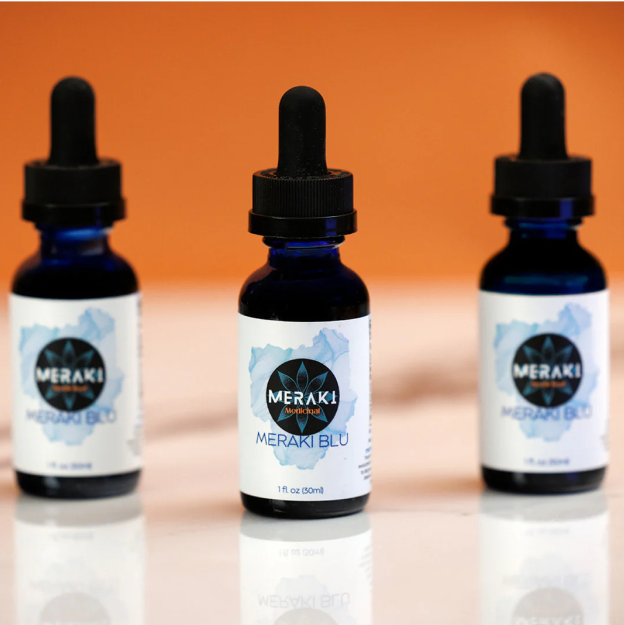
Meraki Blu Azul de metileno de grado USP 150 mg

1.644

Boosts daily energy, keeps you active.

Reduces fatigue, promotes overall vitality.

Supports long-term brain and body health.

$35.00

ADD TO CART

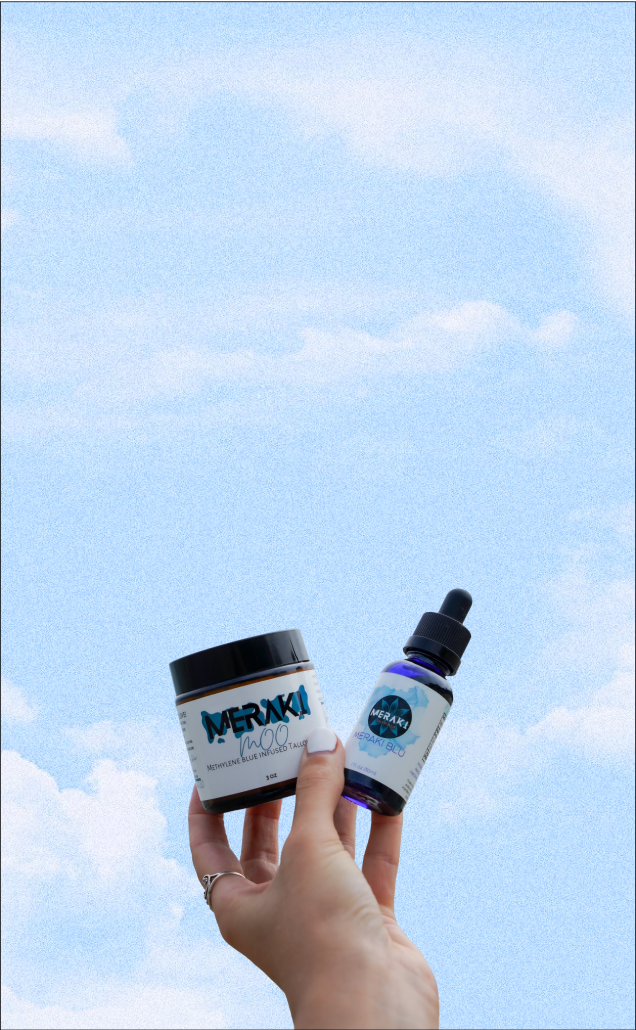
Moo Tallow Balm

(211)

Deeply nourishes and hydrates skin.

Infused with soothing methylene blue.

Supports skin barrier and glow.

$0.00

ADD TO CART

High Potency Cold-Pressed Organic Black Seed Oil with 3% Thymoquinone

128

Cold-pressed for maximum potency.

Promotes immune and heart health.

Rich in natural thymoquinone.

$40.00

ADD TO CART

Blu Moo Bundle

(300)

Skin and mind wellness duo.

Includes balm and energy drops.

Perfect for daily wellness ritual.

ADD TO CART

Meraki Acid Wash Hoodie

Soft, breathable premium cotton blend.

Minimal Meraki embroidered design.

Designed for comfort and style.

ADD TO CART

Meraki Blu Cotton Cut Off

Soft, breathable premium cotton blend.

Signature Meraki Blu graphic print.

Designed for comfort and style.

ADD TO CART

Meraki Blu Cotton Crop Top

Soft, breathable premium cotton blend.

Signature Meraki Blu graphic print.

Designed for comfort and style.

ADD TO CART

Meraki Blu Azul de metileno de grado USP 150 mg

1.644

Boosts daily energy, keeps you active.

Reduces fatigue, promotes overall vitality.

Supports long-term brain and body health.

$35.00

ADD TO CART

High Potency Cold-Pressed Organic Black Seed Oil with 3% Thymoquinone

128

Cold-pressed for maximum potency.

Promotes immune and heart health.

Rich in natural thymoquinone.

$40.00

ADD TO CART

BESTSELLER

Meraki Blu Azul de metileno de grado USP 150 mg

(

1.644

Reviews)

1.644

Deeply nourishes and hydrates skin.

Infused with soothing methylene blue.

Supports skin barrier and glow.

$35.00

SHOP NOW

High Potency Cold-Pressed Organic Black Seed Oil with 3% Thymoquinone

(

128

Reviews)

128

Cold-pressed for maximum potency.

Promotes immune and heart health.

Rich in natural thymoquinone.

$40.00

SHOP NOW

High Potency Cold-Pressed Organic Black Seed Oil with 3% Thymoquinone

(

128

Reviews)

128

Cold-pressed for maximum potency.

Promotes immune and heart health.

Rich in natural thymoquinone.

$40.00

SHOP NOW

Skin and mind wellness duo.

Includes balm and energy drops.

Perfect for daily wellness ritual.

ADD TO CART

Soft, breathable premium cotton blend.

Minimal Meraki embroidered design.

Designed for comfort and style.

ADD TO CART

100% Cotton Cut Off Shirt

Meraki Blu Coffee Mug

Fits True To Size

ADD TO CART