

Methylene Blue Benefits: What the Research Actually Shows (And What Supplementing Feels Like)
Your mitochondria produce less energy every decade after your 30s. Not a little less. Measurably less. The fatigue you blamed on poor sleep or stress or aging? It might actually be a power supply problem happening inside your cells.
And the cost compounds. Every foggy morning, every afternoon where you can’t focus, every weekend you spend recovering instead of living. Your to-do list doesn’t shrink because you’re tired. It just rolls over to tomorrow. And tomorrow’s mitochondria are slightly less efficient than today’s.
Methylene blue is one of very few compounds that can bypass damaged sections of the mitochondrial electron transport chain and restore energy production at the source. Not mask it. Not borrow it. Restore it.
That’s a bold claim. So let’s look at what 18,000+ published studies, 140 years of medical use, and 114,000+ customers actually show.
What Methylene Blue Is (And Why It Isn’t Just Another Supplement)
Methylene blue was synthesized in 1876. It was the first fully synthetic drug ever used in medicine, predating antibiotics by decades. It has an FDA-approved medical use for methemoglobinemia. The World Health Organization lists it as an essential medicine.
This matters because the compound you’re reading about isn’t a wellness trend. It’s one of the most studied molecules in pharmacology, with a research lineage stretching back further than almost any supplement on the market.
At low doses, methylene blue acts as an alternative electron carrier in your mitochondrial electron transport chain. That’s the mechanism behind nearly every benefit on this list. When parts of the ETC are damaged or underperforming (which happens with age, toxin exposure, and chronic stress), methylene blue can shuttle electrons around the damaged sections and keep ATP production running.
Think of it like a detour around a roadblock in your cells’ power grid. The power plant is still there. The fuel is still there. There’s just a broken connection in the middle. Methylene blue is the bypass.
Methylene Blue Benefits Backed by Research
Here’s where we get specific. Not “may support wellness.” Not “promotes overall health.” Specific mechanisms, specific researchers, specific findings.
We’ve ordered these by strength of evidence. The benefits with the deepest research come first.
1. Mitochondrial Energy Production
This is the foundational benefit. Everything else on this list flows from it.
Your mitochondria convert food and oxygen into ATP, the energy currency your cells run on. The electron transport chain is the assembly line where this happens. It has four complexes, and damage to any of them reduces your total energy output.
Methylene blue acts as an alternative electron carrier, accepting electrons at Complex I and donating them directly to cytochrome c oxidase (Complex IV). When Complexes I or III are damaged, MB effectively creates a shortcut that keeps ATP production going.
Dr. Francisco Gonzalez-Lima’s research at UT Austin demonstrated that low-dose methylene blue increased cytochrome c oxidase activity by approximately 30% in animal studies. That’s a measurable increase in the specific enzyme responsible for the final step of cellular energy production.
This isn’t a theory. It’s published, peer-reviewed, and replicable.
But energy production is just the beginning.
2. Cognitive Performance and Memory
The brain consumes roughly 20% of your body’s total energy despite being only 2% of your body weight. When mitochondrial efficiency drops, the brain feels it first. That’s why brain fog and mental fatigue are often the earliest signs of declining cellular energy.
Gonzalez-Lima’s research showed that low-dose methylene blue enhanced memory retention in controlled studies. A study published in the journal Psychopharmacology found that a single low dose of MB (between 1 and 4 mg/kg in research settings, far above typical supplement doses of 1 to 5 mg) significantly improved memory for previously learned information, even when tested 24 hours later.
A clinical trial registered as NCT01836094 specifically studied USP-grade methylene blue’s effects on cognitive function and brain activity using fMRI imaging. The research examined how MB affects neural activation patterns during memory tasks.
The cognitive benefit isn’t mysterious. More mitochondrial energy in brain cells means more resources available for the neural processes that form, store, and retrieve memories. More energy for your neurons means sharper thinking.
3. Neuroprotection
Beyond boosting energy, methylene blue has demonstrated neuroprotective properties in research settings. It helps reduce oxidative stress in neurons by neutralizing free radicals that can damage brain cells over time.
A review published in Cureus found that methylene blue has various neuroprotective benefits, including improving memory and cognitive function while protecting neural tissue from oxidative damage. Pharmaceutical-grade methylene blue can cross the blood-brain barrier, which means it reaches the brain tissue where protection matters most.
This is particularly relevant for anyone concerned about long-term brain health. The compound doesn’t just boost performance today. The research suggests it may help protect the neural infrastructure you’ll need tomorrow.
Now here’s where it gets interesting.
4. Antioxidant Activity
Here’s something most people get wrong about antioxidants: taking more isn’t always better, and most antioxidant supplements have a narrow window of usefulness.
Methylene blue is different. It functions as a conditional antioxidant, meaning its behavior adapts to the cellular environment. At low concentrations, it cycles between its oxidized form (blue) and reduced form (colorless), acting as an electron shuttle that reduces the production of damaging superoxide molecules within the mitochondria.
This is more sophisticated than a simple “scavenging” antioxidant like vitamin C. MB addresses oxidative stress at the source, inside the mitochondria, rather than trying to mop it up after the fact. The research calls this a “mitochondria-targeted antioxidant” effect, and it’s one of the reasons MB has shown promise across so many different conditions.
5. Mood Support
Methylene blue has documented effects on multiple neurotransmitter pathways. A study published in Biological Psychiatry found that daily MB supplementation had significant antidepressant effects in participants with severe depressive illness.
The mood benefit comes through at least two mechanisms. First, the mitochondrial energy enhancement supports neurotransmitter production (your brain needs ATP to synthesize serotonin, dopamine, and norepinephrine). Second, methylene blue has mild monoamine oxidase inhibitor (MAO-I) activity, which slows the breakdown of certain neurotransmitters.
This dual mechanism is actually at the center of a current debate. Researcher Chris Masterjohn has argued that MB’s mood effects are “just MAOI activity, not mitochondrial.” But the published research suggests both mechanisms are operating simultaneously. The Gonzalez-Lima fMRI studies showed changes in brain metabolic activity (mitochondrial), not just neurotransmitter levels. The honest answer is that both pathways likely contribute, and the relative importance may vary by dose and individual.
This is also why the SSRI interaction warning is critical. Because MB has MAO-I properties, combining it with serotonergic medications creates a genuine risk of serotonin syndrome. This isn’t a theoretical concern. Don’t combine methylene blue with SSRIs, SNRIs, or MAOIs.
6. Anti-Aging at the Cellular Level
Aging, at the cellular level, is partly a story of declining mitochondrial function. Your cells produce less ATP. They accumulate more oxidative damage. They lose the ability to repair efficiently.
Methylene blue addresses this through the same mitochondrial mechanism that supports energy and cognition. By maintaining electron transport chain function and reducing oxidative stress, it helps preserve the cellular infrastructure that degrades with age.
Researchers have noted that MB’s antioxidative properties could help reduce the oxidative stress involved in cellular aging. We covered this in depth in our guide to methylene blue and anti-aging, but the core insight is that supporting mitochondrial health is one of the few interventions that targets aging at its root rather than addressing symptoms on the surface.
There’s one more benefit worth mentioning, though it isn’t the reason most people reach for MB.
7. Antimicrobial Properties
Methylene blue has demonstrated antimicrobial effects against several pathogen types. A study published in the Journal of Orthopedic Surgery and Research found that MB contains antimicrobial agents that inhibit the growth of candida species, Staphylococcus bacteria, and E. coli.
This is an older, well-established property of the compound. It was actually used as an antimalarial treatment before modern antimalarials were developed. While this isn’t the primary reason most people supplement with MB today, it contributes to the overall profile of a compound with remarkably broad biological activity.
What Supplementing Actually Feels Like
The clinical literature tells you about mechanisms and p-values. Here’s what over 114,000 Meraki Blu customers have taught us about the real-world experience.
The first few days. Most people notice improved mental clarity first. Not a stimulant buzz. More like the fog lifting. Colors seem slightly more vivid. Thoughts connect faster. Many customers describe it as “my brain working the way it used to.”
The first week. Energy becomes steadier. Not the spike-and-crash pattern of caffeine. A consistent baseline that holds through the afternoon. Some users report better sleep quality despite the increased daytime energy, likely because MB supports cellular efficiency rather than artificially stimulating alertness.
Ongoing use. The benefits compound. Users who track their cognitive performance with tools like Lumosity or Cambridge Brain Sciences often report measurable improvements over 4 to 8 weeks. The neuroprotective benefits aren’t something you feel day-to-day, but they represent the long-term value of consistent supplementation.
The blue tongue. Yes, your tongue will turn blue. Your urine may turn blue-green. This is completely normal, completely harmless, and honestly? Over 114,000 people have decided it’s a small price to pay. Some of our customers call it a badge of honor.
The Dose-Response Curve Matters
One thing that separates MB from most supplements: more isn’t better.
Methylene blue follows what researchers call a hormetic dose-response curve. At low doses, it enhances mitochondrial function and protects cells. At high doses, it can overwhelm redox balance and become counterproductive.
This is critical to understand. Clinical research often uses doses of 0.5 to 2 mg/kg of body weight. Those aren’t supplement recommendations. Those are controlled research protocols.
For supplementation, the sweet spot is much lower:
- Beginners: 1 to 3 drops of Meraki Blu (0.25 to 0.75 mg). Start here.
- Most common dose: Around 20 drops (~5 mg). This is where about 90% of regular users settle.
- Upper range: 5 to 15 mg, ideally under professional guidance.
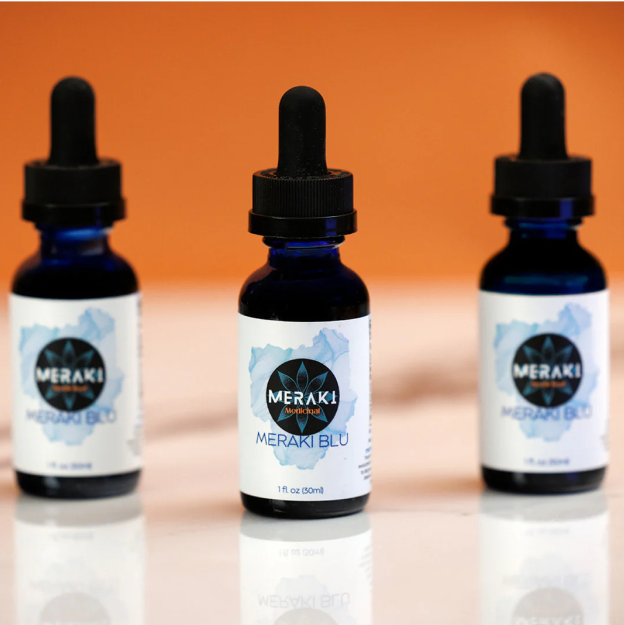
Meraki Blu is a 0.5% solution delivering 5 mg per mL and approximately 0.25 mg per drop. The dropper format makes precise, gradual dosing simple. Start low. Increase slowly. Find your level. We cover the full protocol in our complete dosage guide.
Who Gets the Most Methylene Blue Benefits
Based on the research and our customer data, methylene blue tends to help most in a few specific situations:
If you have persistent brain fog that doesn’t respond to better sleep and diet. Brain fog often traces back to mitochondrial underperformance. If you’ve already optimized sleep, nutrition, and stress management, the missing piece may be at the cellular level.
If you’re over 35 and noticing cognitive or energy decline. Mitochondrial efficiency drops measurably after your 30s. This is normal physiology, not a disease. But it’s addressable.
If you’re building a mitochondrial health protocol. MB works as a stack multiplier with other mitochondrial interventions like red light therapy, NAD+ precursors, and exercise. Each targets the same system from a different angle.
If you want steady energy without stimulants. Coffee borrows energy by blocking adenosine receptors. That’s why the crash comes later. MB supports actual ATP production. The energy is real, not borrowed.
Methylene Blue Safety and Side Effects
Methylene blue has 140+ years of documented medical use. Its safety profile at low supplemental doses is well-established. But there are real contraindications you need to know:
Absolute contraindications: - SSRIs, SNRIs, or MAOIs (serotonin syndrome risk) - G6PD deficiency (risk of hemolytic anemia) - Pregnancy or breastfeeding (insufficient data, consult your physician)
Expected and harmless: - Blue-green urine - Temporary blue tongue staining - Blue-tinged stool
We cover every side effect and interaction in our full side effects guide. If you’re on any serotonergic medication, don’t take methylene blue. This isn’t a general disclaimer. It’s a specific, serious medical interaction.
Why Purity Is the Entire Game
Not all methylene blue is the same. Most of what’s sold online, especially on Amazon, is industrial-grade or reagent-grade. The same stuff used in aquariums and textile dyes. It contains unknown levels of heavy metals, solvents, and impurities.
This matters enormously because methylene blue crosses the blood-brain barrier. Whatever contaminants are in the bottle go directly to your brain tissue.
Meraki Blu is USP pharmaceutical-grade methylene blue. Made in Las Vegas, Nevada. Clean Label Project certified. Our certificate of analysis confirms 5.27 mg/mL concentration and heavy metal testing with all results at or below 0.01 ppm.
When you’re choosing a methylene blue supplement, the question isn’t “which brand has the best marketing.” It’s “which brand publishes their lab results.” We do. You can verify it yourself.
Frequently Asked Questions
What are the main benefits of methylene blue?
The primary researched benefits include enhanced mitochondrial energy production, improved cognitive function and memory, neuroprotection against oxidative stress, conditional antioxidant activity, mood support through multiple neurotransmitter pathways, and anti-aging effects at the cellular level. At low supplemental doses, it acts as an alternative electron carrier in the mitochondrial electron transport chain, which is the mechanism behind most of its benefits.
How long does it take to feel the benefits of methylene blue?
Many users report noticing improved mental clarity and energy within the first few days. MB has a half-life of 5 to 6.5 hours, so acute effects on alertness can be felt within hours. Deeper benefits like sustained cognitive improvement build over weeks of consistent use. Most of our customers report their clearest improvements within the first two weeks.
Is methylene blue safe to take as a supplement?
At low supplemental doses (1 to 15 mg), pharmaceutical-grade MB has a well-documented safety profile backed by over 140 years of medical use. Critical safety points: don’t combine with SSRIs, SNRIs, or MAOIs. Get tested for G6PD deficiency before starting. Consult your physician if pregnant or breastfeeding. Blue-green urine and temporary tongue staining are normal and harmless.
What is the best dose of methylene blue for cognitive benefits?
Research and customer experience suggest low doses provide the most benefit due to MB’s hormetic dose-response curve. Most supplement users find their effective range between 1 and 5 mg daily. Meraki Blu delivers 0.25 mg per drop, so beginners typically start with 1 to 3 drops and gradually increase to around 20 drops (approximately 5 mg).
Does methylene blue actually improve memory?
Research from Dr. Francisco Gonzalez-Lima at UT Austin showed that low-dose MB enhanced memory retention and increased cytochrome c oxidase activity by approximately 30% in animal studies. A clinical trial (NCT01836094) also studied USP-grade MB’s effects on cognitive function using fMRI. The memory benefits are tied to improved mitochondrial energy production in brain cells.
Can methylene blue replace my morning coffee?
MB works differently than caffeine. Coffee borrows energy by blocking adenosine receptors, which is why you crash later. MB supports actual cellular energy production by improving how your mitochondria generate ATP. Some users replace coffee entirely. Others use both. The key difference: MB addresses the root cause of low energy at the cellular level rather than masking it with a stimulant.
Your Cells Are Waiting
You just read through the evidence. Mitochondrial energy production. Cognitive performance. Neuroprotection. The science isn’t ambiguous. It isn’t theoretical. It’s 18,000+ published studies and 140 years of medical use pointing in the same direction.
The question isn’t whether methylene blue has benefits. The question is whether the methylene blue you take is pure enough to deliver them safely.
Meraki Blu is USP pharmaceutical-grade, Clean Label Project certified, and made in Las Vegas. We publish our lab results because we believe you should be able to verify what you put in your body, especially when it crosses the blood-brain barrier.
If you’re ready to see what your cells can actually do, start with Meraki Blu.
Beginners: 1 to 3 drops. Work up from there. Your mitochondria will tell you when they’re getting what they need.