

You know the feeling.
You walk into a room and forget why. You reread the same paragraph three times. Someone asks you a simple question and your brain just stalls. Like it's buffering.
Brain fog. It sounds trivial when you say it out loud. But living with it? That is a different story entirely.
Here is what most people get wrong about brain fog: they blame sleep, stress, screen time, or aging. Sometimes all four. And sure, those things matter. But they are not the root cause for most people.
The root cause is smaller. Cellular, actually.
Your Brain Runs on ATP. And You Are Running Low.
Every thought you think, every memory you form, every decision you make requires energy. Cellular energy, specifically. A molecule called ATP.
Your brain is roughly 2% of your body weight. It consumes about 20% of your total energy. That is not a metaphor. Your brain is the single most energy-hungry organ in your body, and it runs on mitochondria.
Mitochondria are the structures inside your cells that produce ATP. You have billions of them. And here is the part nobody tells you: they get worse at their job over time.
Some researchers estimate mitochondrial efficiency declines around 8% per decade after age 30. By 50, your cells are producing measurably less ATP than they did at 25. By 60, the deficit is significant.
That is not "getting older." That is a measurable power failure happening inside your cells. And your brain, because it demands so much energy, feels it first.
The fog. The forgetfulness. The 2pm crash that coffee barely touches. It is not a personality flaw. It is an energy problem.
What Brain Fog Actually Looks Like Inside Your Cells
To understand why methylene blue matters for brain fog, you need to understand the electron transport chain. Stay with me. This is simpler than it sounds.
Your mitochondria produce ATP through a series of molecular handoffs called the electron transport chain, or ETC. Think of it like an assembly line with four stations (Complex I through IV). Electrons move down the line, and at each station, energy is captured and stored as ATP.
When the assembly line runs smoothly, you feel sharp. Clear. Energized.
But the line breaks down. Aging, toxins, chronic stress, and inflammation damage these complexes. When Complex I or Complex III gets impaired, the whole line slows. Fewer electrons reach the end. Less ATP gets made. And your brain pays the price.
This is where most supplements stop being useful. NAD+ precursors like NMN fuel the top of the chain. CoQ10 supports one specific handoff. But if the line itself is damaged? Adding more fuel to a broken assembly line does not fix the line.
How Methylene Blue Fixes the Brain Fog Bottleneck
Methylene blue does something no other supplement can do. It bypasses the damaged sections entirely.
At the molecular level, methylene blue acts as an alternative electron carrier. It picks up electrons that get stuck at damaged complexes and shuttles them directly to Complex IV (cytochrome c oxidase), skipping the broken parts of the chain.
Dr. Francisco Gonzalez-Lima at the University of Texas at Austin has studied this mechanism extensively. His research showed that low-dose methylene blue increased cytochrome c oxidase activity by approximately 30% in animal studies, directly improving the brain's capacity to produce energy.
Think of it this way: if your mitochondria are a highway with a collapsed bridge at mile marker two, methylene blue is not a better car or premium gasoline. It is a detour road that goes around the collapse and gets you to your destination anyway.
That is why people feel the difference quickly. Not because MB is a stimulant. It is not. It does not borrow energy from tomorrow the way caffeine does. It actually restores the cell's ability to produce energy at the source.
Rojas et al. published work in 2012 confirming that methylene blue enhances brain cytochrome oxidase activity and memory retention. Tucker et al. (2018) further characterized MB's role as an alternative electron carrier in the ETC. And a review published through the National Institutes of Health (PMC5826781) documented MB's neuroprotective effects across stroke, Alzheimer's disease models, Parkinson's, and traumatic brain injury.
This is not a new compound. Methylene blue was the first synthetic drug ever used in medicine. That was 1876. There are over 18,000 published studies on it. The biohacking community did not discover methylene blue. They rediscovered what medical science already knew.
Brain Fog Is Not One Thing. But the Root Cause Often Is.
Brain fog shows up differently for different people. For some, it is the afternoon crash that makes work after lunch feel impossible. For others, it is forgetting names, losing trains of thought, or struggling to focus on a conversation.
Long COVID brought brain fog into mainstream awareness. A case study published in the Journal of NeuroVirology documented a patient with significant long COVID brain fog who responded to methylene blue, likely through its mitochondrial support and anti-neuroinflammation properties.
Chronic fatigue, post-viral cognitive issues, age-related decline, even the "mommy brain" that new parents joke about: these all share a common thread. Mitochondria under stress, underproducing ATP, leaving the brain scrambling for energy it cannot get.
This does not mean methylene blue is a magic bullet. It is not. And we are going to be honest about what the research does and does not show.
The animal research is strong. The mechanistic evidence is robust. Human studies are still catching up. A small imaging study showed that low-dose MB increased brain activity in memory-related areas during cognitive tasks. Larger clinical trials are needed to confirm what the preclinical data suggests.
That said, 114,000+ customers have tried Meraki Blu. Over 7,000 verified reviews speak to real-world experience. And the mechanism of action, an alternative electron carrier that bypasses mitochondrial damage, is not speculative. It is established biochemistry.
Why Purity Matters More for Brain Fog Than Almost Anything Else
Here is a fact that should stop you cold: methylene blue crosses the blood-brain barrier.
That is part of why it works. It reaches the brain directly. It can support mitochondrial function right where you need it most.
But it also means whatever is in that bottle goes straight to your brain. Every impurity. Every heavy metal. Every contaminant from a sloppy manufacturing process.
Most methylene blue sold on Amazon is industrial grade. The same compound used to dye textiles and treat aquariums. It is cheap because it was never made for human consumption.
Tim Ferriss said it on his podcast in March 2026: "120 years of research, zero guardrails." He was talking about the gap between MB's legitimate medical history and the unregulated supplement market selling unknown-quality compounds.
This is where sourcing becomes the whole conversation. We started Meraki because we couldn't find a single bottle on the market we actually trusted. Pharmaceutical-grade (USP) methylene blue is manufactured to human safety standards, tested for heavy metals, and verified for concentration. Industrial grade is not.
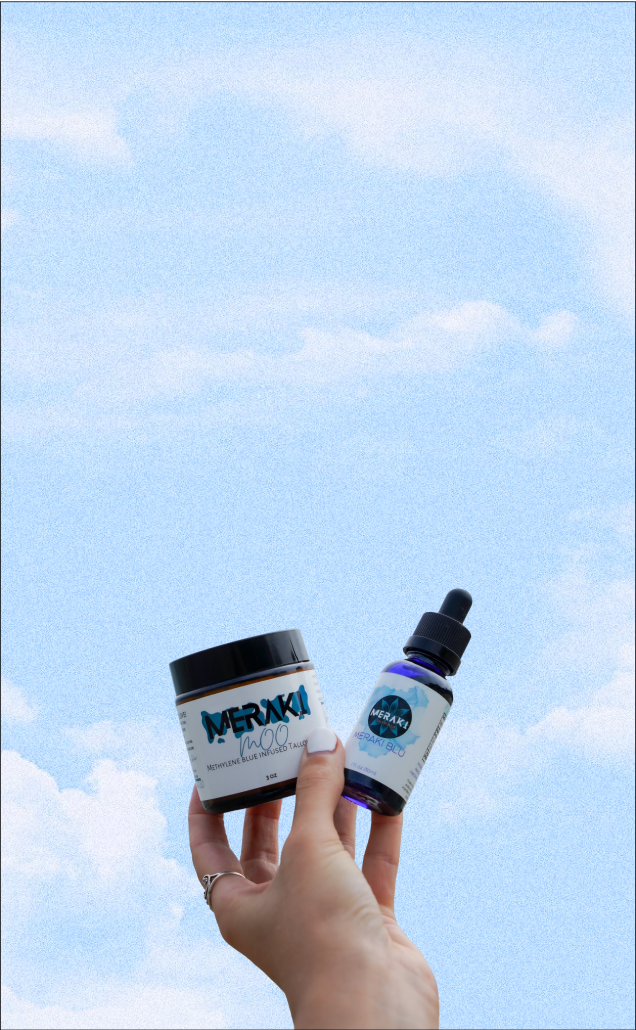
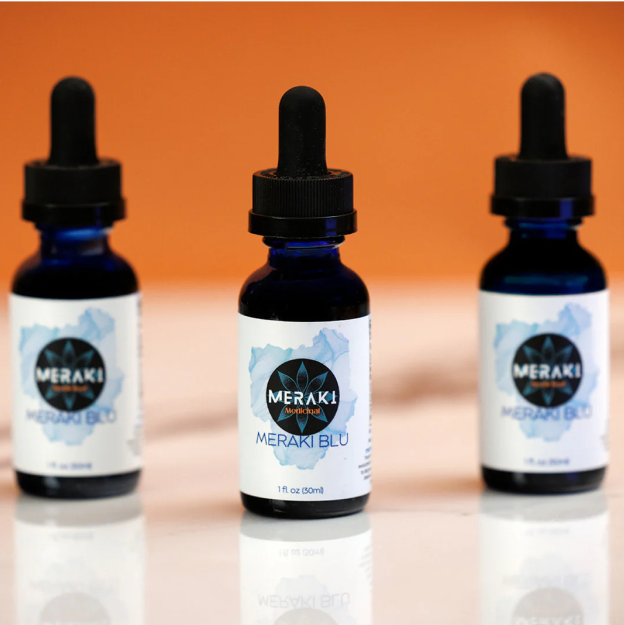
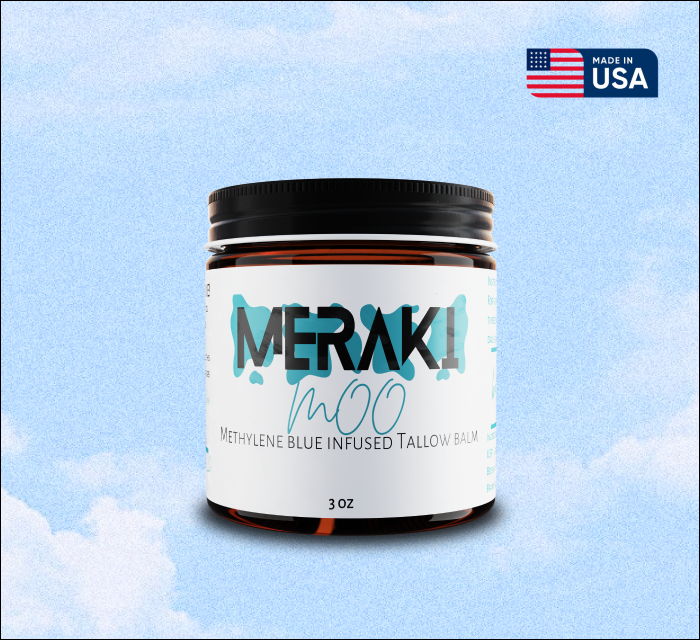
Meraki Blu is a 0.5% USP pharmaceutical-grade methylene blue solution. Made in Las Vegas, Nevada. Clean Label Project certified. Every batch is tested. The COA (Certificate of Analysis) is published and verifiable. The actual tested concentration is 5.27 mg/mL, right where it should be.
When something crosses your blood-brain barrier, you do not want to be guessing about what is in it.
What to Expect: Timeline, Dosage, and the Blue Tongue
If you decide to try methylene blue for brain fog, here is what most people experience:
Day 1: Some users notice a subtle shift in mental clarity within 30 to 60 minutes of the first dose. Others notice nothing the first day. Both are normal.
Week 1: Consistent users typically report clearer thinking and slightly better energy by the end of the first week. The fog does not vanish overnight, but it starts to thin.
Weeks 2 to 4: This is where the compound effect shows up. Mitochondrial function improves gradually. People report better focus, fewer afternoon crashes, and an easier time staying on task.
Dosage: Start low. Meraki Blu delivers 0.25 mg per drop. Beginners typically start with 1 to 3 drops daily (0.25 to 0.75 mg). Most people find their optimal dose around 20 drops, which is approximately 5 mg. If you want to go beyond that, 5 to 15 mg is the upper range and best done under professional guidance.
Do not start at the top. Your body needs time to adjust, and more is not always better with methylene blue. The dose-response curve is biphasic: low doses support mitochondrial function, while very high doses can actually inhibit it.
The blue tongue: Yes, it happens. Your tongue and your urine will turn blue-green. It is completely harmless and temporary. Most people treat it as a badge of honor.
For a full dosing breakdown, see our Complete Methylene Blue Dosage Guide.
Safety: What You Need to Know
Methylene blue is one of the oldest medicines in modern pharmacology. It has an FDA-approved medical use (for methemoglobinemia) and a long safety track record at low doses.
But there are real contraindications:
SSRI, SNRI, or MAOI medications: Methylene blue has MAOI properties. Combining it with serotonergic drugs creates a risk of serotonin syndrome. This is a serious interaction. If you take antidepressants, talk to your prescriber before using MB.
G6PD deficiency: People with this genetic enzyme deficiency are at risk for hemolytic anemia with MB. Get tested if you are unsure.
Pregnancy and breastfeeding: Not enough safety data. Consult your physician.
These are not edge cases to brush aside. They matter, and we will always call them out.
Frequently Asked Questions
How fast does methylene blue work for brain fog?
Many people notice sharper thinking within 30 to 60 minutes of the first dose. Full cognitive benefits typically build over 1 to 2 weeks of consistent use. It varies based on your baseline mitochondrial function and how much your ETC is compromised.
What is the best dosage of methylene blue for brain fog?
Start with 1 to 3 drops daily (0.25 to 0.75 mg) if you are using a 0.5% solution like Meraki Blu. Most people settle around 20 drops (approximately 5 mg) as their sweet spot. The key: start low, increase gradually, and listen to your body.
Is methylene blue safe for cognitive enhancement?
At low supplemental doses, yes, for most people. Over 140 years of medical use and 18,000+ published studies support its safety profile. The key exceptions are serotonergic medication users and people with G6PD deficiency. When in doubt, consult a healthcare provider.
Can methylene blue help with long COVID brain fog?
Preliminary evidence is promising. A case study in the Journal of NeuroVirology showed improvement in a long COVID patient with brain fog following MB treatment. The mechanism makes sense: COVID can impair mitochondrial function, and MB supports mitochondrial energy production. But this is early data, not a settled conclusion.
Does methylene blue cross the blood-brain barrier?
Yes. This is both why it works and why quality matters so much. MB reaches brain mitochondria directly. That means purity is non-negotiable. Pharmaceutical-grade, third-party tested, verifiable COA.
What are the side effects of methylene blue?
Blue-green urine and a temporarily stained tongue are the most common effects, and they are harmless. At low doses, GI discomfort is occasionally reported, especially on an empty stomach. Serious side effects are rare at supplemental doses but can occur with drug interactions (SSRIs, MAOIs) or in people with G6PD deficiency.
The Fog Is Optional
Brain fog is not a personality trait. It is not an inevitable consequence of aging, stress, or "just how things are." It is a measurable energy deficit inside your cells, and there is a compound with 140 years of medical history and 18,000+ published studies that directly addresses it at the mitochondrial level.
Not by masking symptoms. Not by borrowing energy from tomorrow. By actually restoring the electron transport chain's ability to produce ATP.
If you want to see the lab results behind Meraki Blu, we publish them. View our Certificate of Analysis. If you want to understand dosing, we wrote a complete guide. If you want to compare pharmaceutical-grade to industrial-grade, we wrote that too: USP vs. Industrial Grade Methylene Blue.
Start with 1 to 3 drops. Give it a week. Your mitochondria will do the rest.